Law & Legal
A Law Abiding Citizen, A Law Abiding Citizen Cast, A Law Or Regulation, A Lawful Permanent Resident, A Lawless Street, A Lawyer, A Lawyer Who Represents Himself, A Lawyer Writes, B Law 301, B Law Class, B Law Firm, B Law Quizlet, B Lawrence Homes, B Laws Ukzn, B Laws Unizulu, B Lawyer, C Lawler Rogers, C Lawrence, C Lawrence Realty Sikeston Mo, Law Abiding Citizen, Law And Order 2022, Law And Order Cast, Law And Order Criminal Intent, Law And Order Organized Crime, Law And Order Svu, Law And Order Svu Cast, Law Balance Scale, Law Band, Law Bar Exam, Law Bird, Law Books, Law Books For Sale, Law Boss, Law By Mike, Law Careers, Law Clerk, Law Clerk Salary, Law Colleges, Law Conservation Of Energy, Law Conservation Of Mass, Law Conservation Of Matter, Law Crossing, Law Of Conservation Of Energy, Law Of Conservation Of Mass, Law Of Cosines, Law School, Lawn Mower, Lawrence Taylor, Lawyers Near Me
Shamika W. Patrick
0 Comments
Court will hear affirmative-action challenges separately, allowing Jackson to participate in UNC case
[ad_1]
SCOTUS NEWS
on Jul 22, 2022
at 6:43 pm
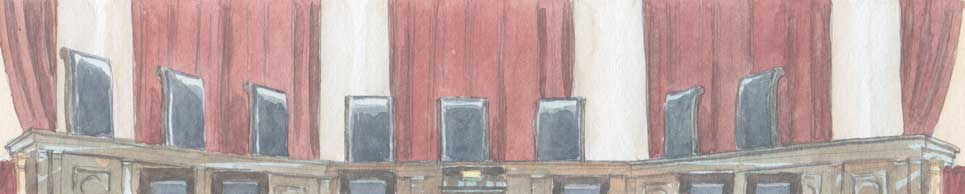
The Supreme Court announced on Friday that it will consider two challenges to the role of race in college admissions separately, rather than – as it had originally planned – together. That news, which came in a brief order from the court, was not unexpected: It allows Justice Ketanji Brown Jackson, the court’s newest justice, to participate in one of the cases, involving the consideration of race in the University of North Carolina’s undergraduate admissions process, while recusing herself from a similar case involving Harvard University, where she recently completed a six-year term on the university’s board of overseers.
The order in Students for Fair Admissions v. President and Fellows of Harvard College and Students for Fair Admissions v. University of North Carolina allotted one hour for argument in each case, rather than the one hour that had initially been allotted for a joint argument in both cases. The cases have not yet been scheduled for oral argument, although they are expected to be argued in the fall.
The challengers in both cases are urging the justices to overrule their landmark 2003 decision in Grutter v. Bollinger, holding that the University of Michigan could consider race in its undergraduate admissions process as part of its efforts to obtain a diverse student body. The justices granted review in the two cases on Jan. 24. Three days later, Justice Stephen Breyer announced his plans to retire when the court began its summer recess; on Feb. 25, President Joe Biden nominated Jackson to succeed Breyer.
At her confirmation hearing in March, Jackson testified that, if confirmed, she would not participate in the Harvard case. That announcement led to Friday’s order, issued just over three weeks after Jackson was sworn in at the Supreme Court.
The decision to separate the two cases mirrored a similar move in 2020, in a pair of cases challenging laws in Colorado and Washington that penalize or remove presidential electors who do not vote for the candidate they pledged to support. The justices granted review in January 2020 and consolidated the cases for a one-hour joint argument. In March 2020, the court announced that the two cases were no longer consolidated: Justice Sonia Sotomayor had recused herself from the Colorado case because of her friendship with one of the challengers in the Colorado case.
This article was originally published at Howe on the Court.
[ad_2]
Source link